



Peristaltic chemical dosing pumps are ideal for difficult-to-handle media in continuous or intermittent operation. They are easy to use, simple to control, versatile, and reliable.
|
Working principle: The delivery of a peristaltic pump is based on an alternately collapsing and relaxing movement that conveys the contents of the hose or tube. This is how our esophagus works. The compression of the hose is performed by shoes or rollers mounted on the rotating part (rotor). As the shoe moves along the length of the hose, the vacated section of the hose regains its original shape, thereby creating a vacuum that draws in the product. As a result, the peristaltic pump is dry-self-priming. Before the shoe completely leaves the hose on the discharge side, another shoe on the suction side compresses it again. There is always at least one shoe/roller that keeps the hose compressed and prevents the liquid from flowing back from the discharge side to the suction side (up to 2-16 bar pressure, depending on the model). Thus, the separation of the discharge side from the suction side is ensured even when the pump is out of operation. Pumps capable of generating higher pressures contain a 2-6 layer reinforced hose. These hoses are very flexible, which is why their suction capacity is also greater than that of their counterparts equipped with non-reinforced hoses. |
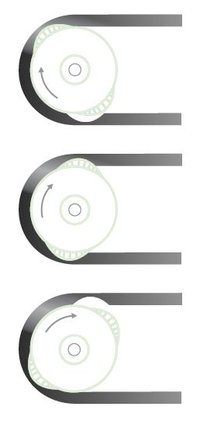 |
Constant flow chemical metering pumps
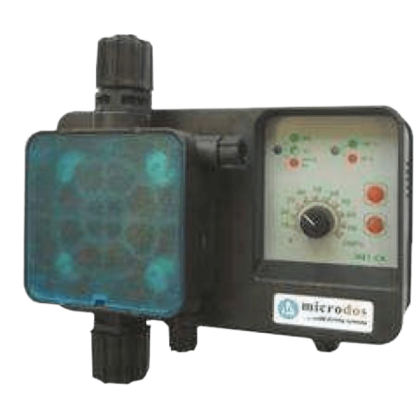
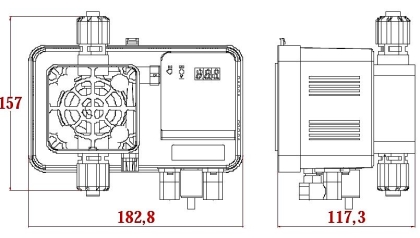
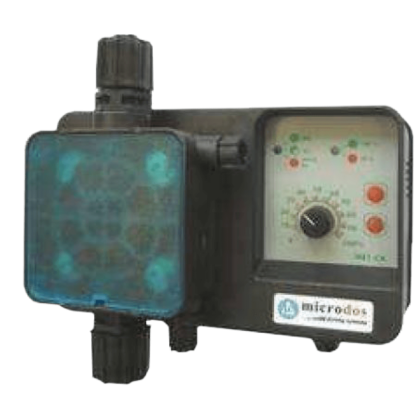
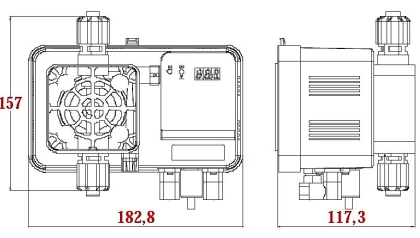
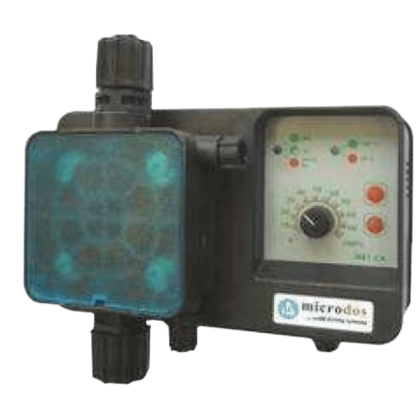
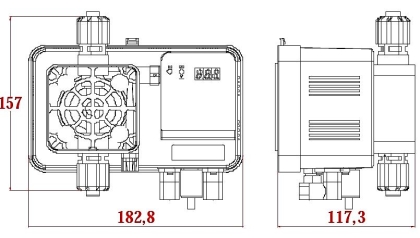
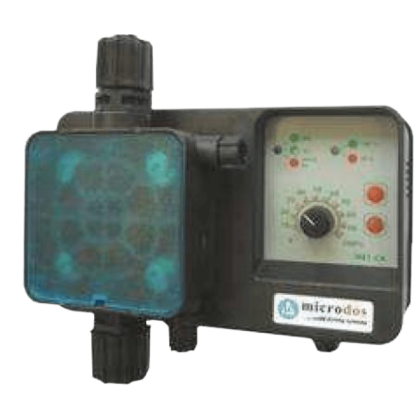
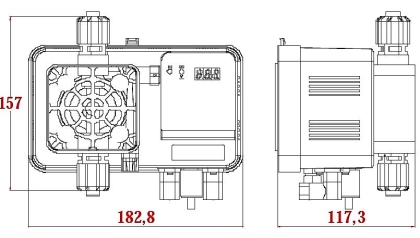
Microdos ME1-CA 2l/h - 12bar
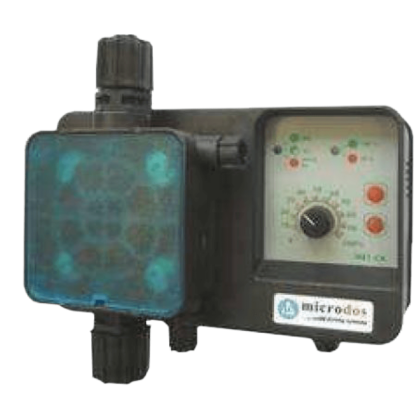
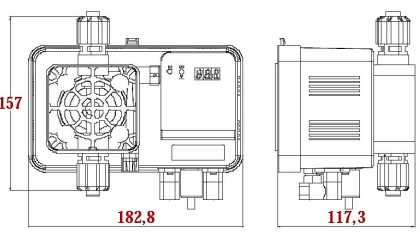
Microdos ME1-CA 3l/h - 11bar
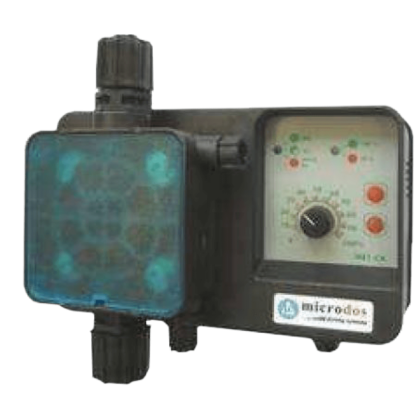
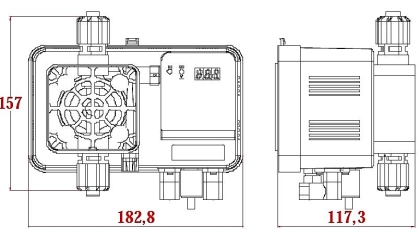
Microdos ME1-CA 5l/h - 9bar
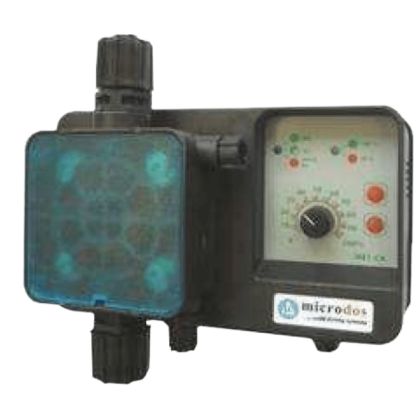
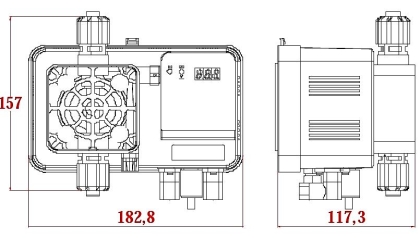
Microdos ME1-CA 6l/h - 8bar
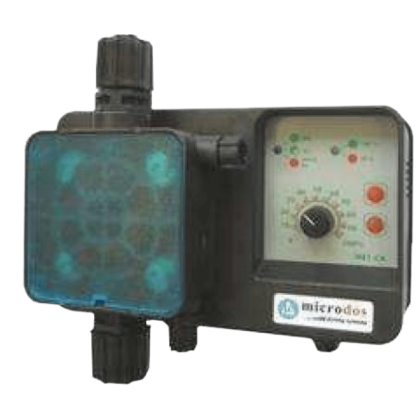
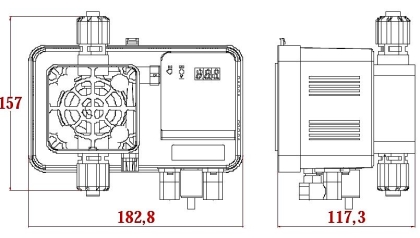
Microdos ME1-CA 8l/h - 5bar
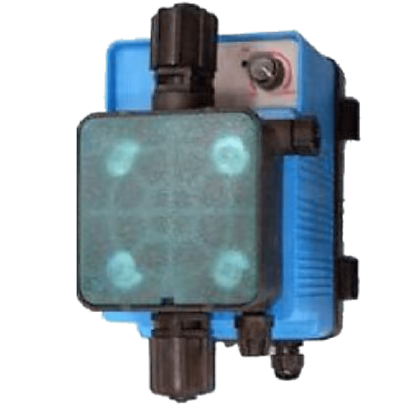
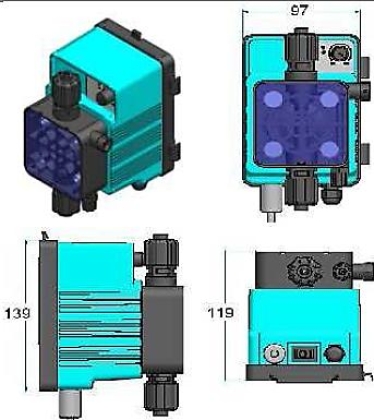
Microdos ME2-CA 3l/h - 7bar
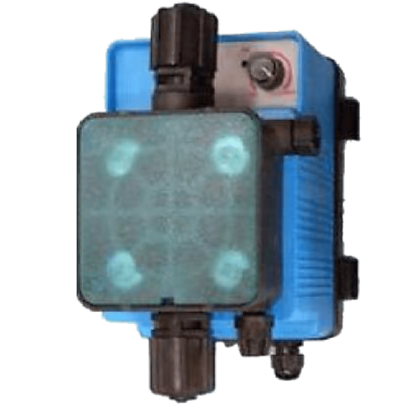
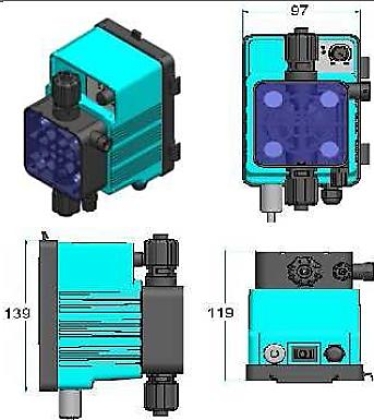
Microdos ME2-CA 4l/h - 5bar
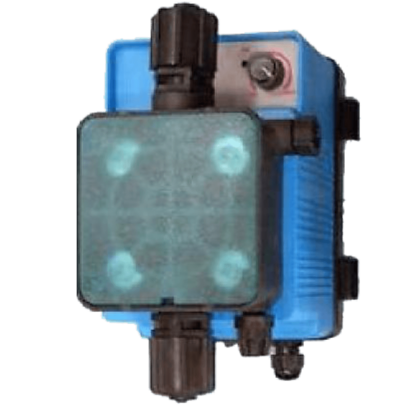
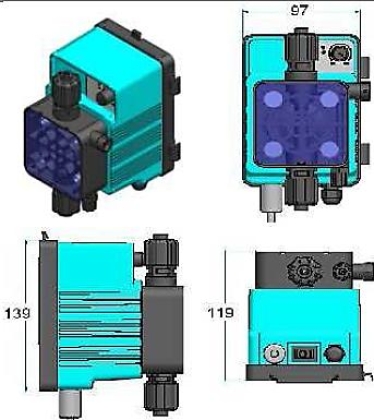
Microdos ME2-CA 5l/h - 2bar
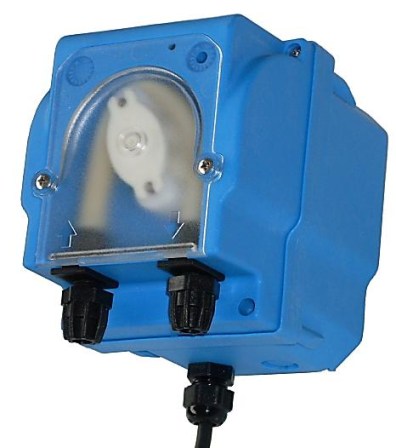
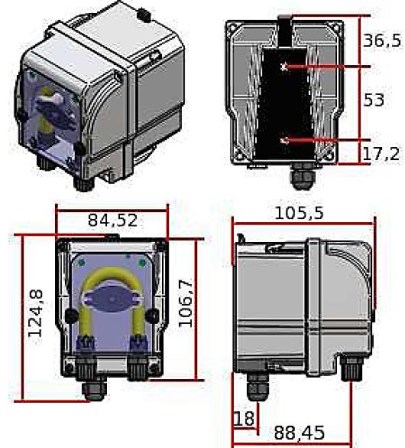
Microdos MP2-B 1,5l/h - 1bar
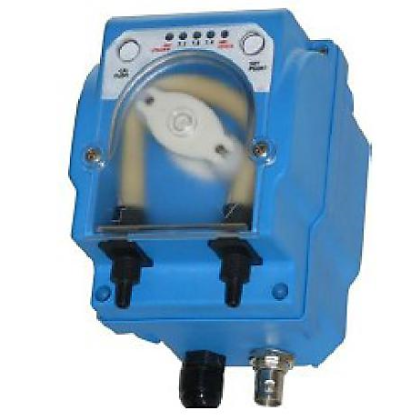
Microdos MP2-PH SUMMER KIT 1l/h - 1bar
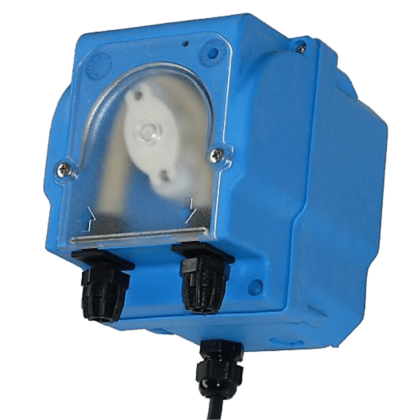
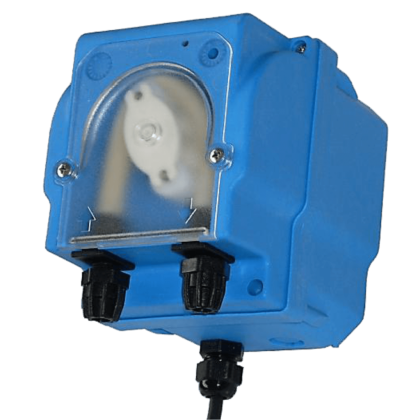
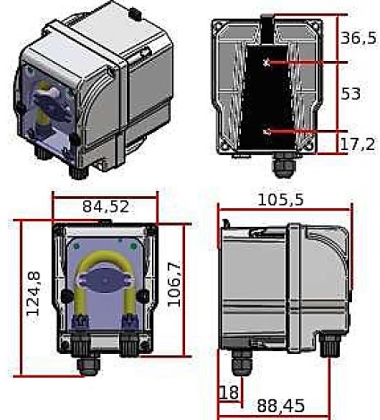
Microdos MP2-B 3l/h - 1bar

